El Ghriba stands on the edge of Erriadh, in the old Jewish village sometimes called Hara Seghira, about 7 km south of Houmt Souk. Djerba’s Jewish community is one of the oldest in North Africa, and local tradition holds that the first synagogue here was founded by priests who fled Jerusalem after the destruction of the First Temple, bringing a stone or a door from it. Historians date the present building to much later — it was largely rebuilt in the 19th and 20th centuries — but the sense of age and devotion is real.
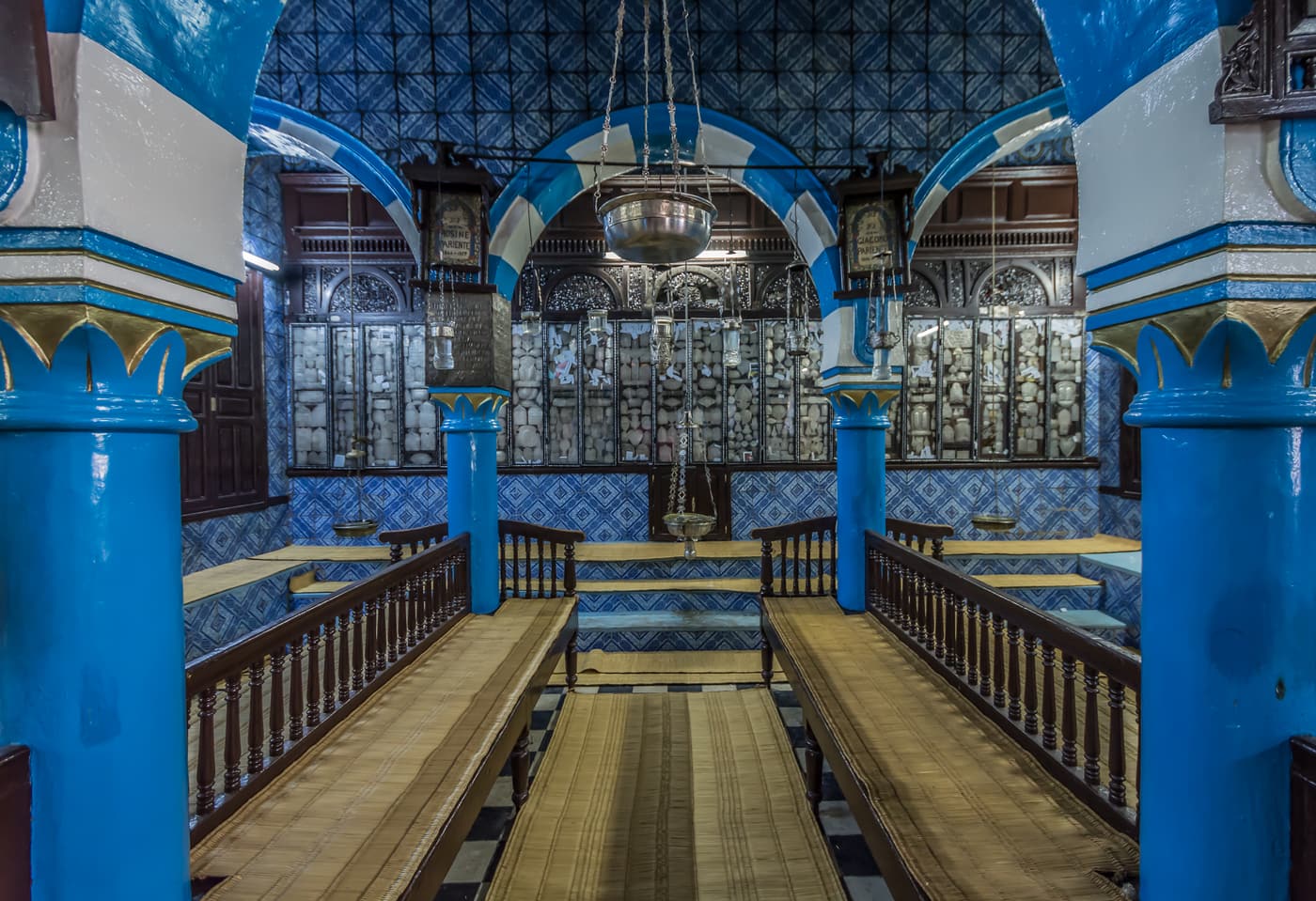
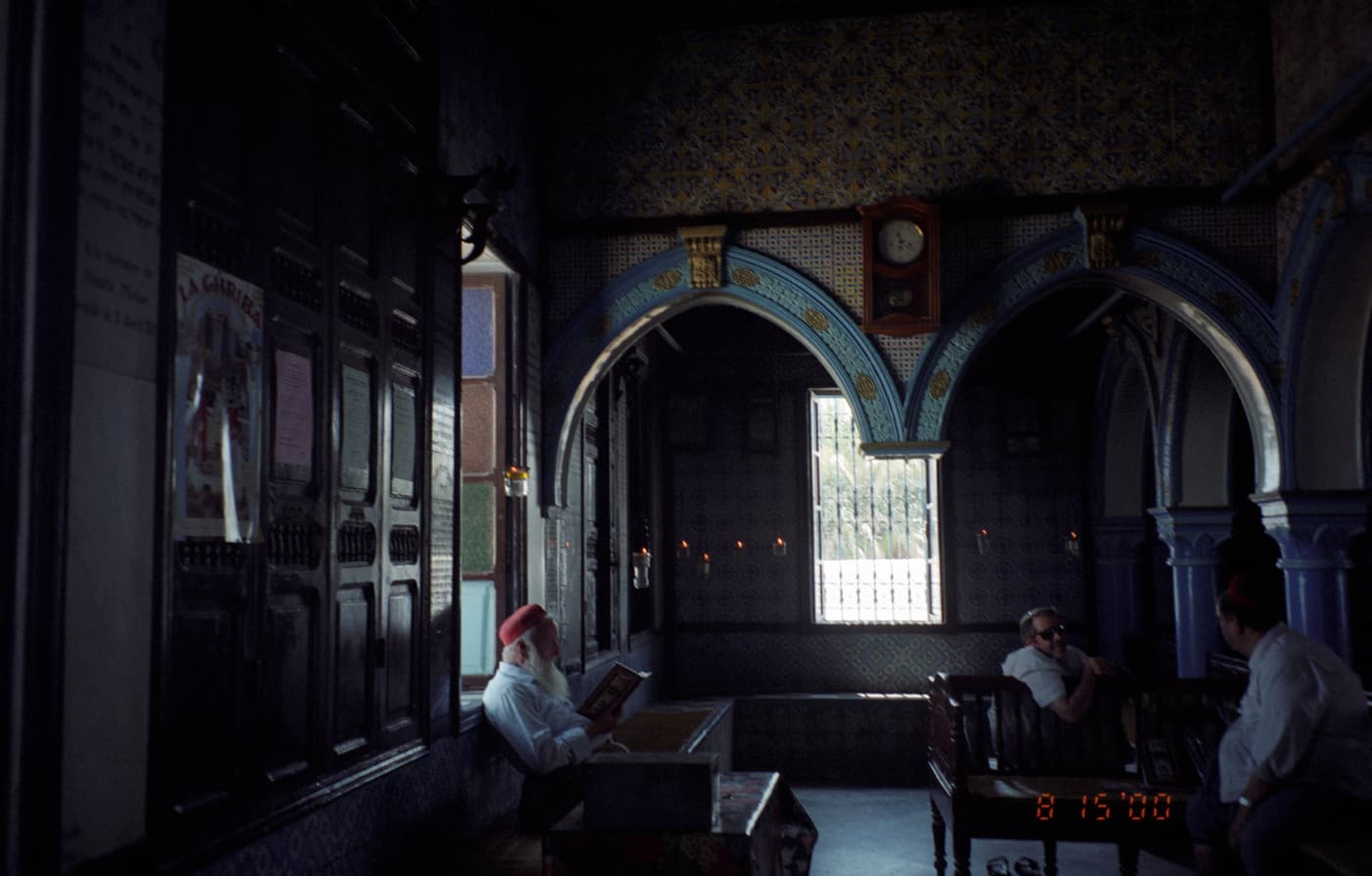
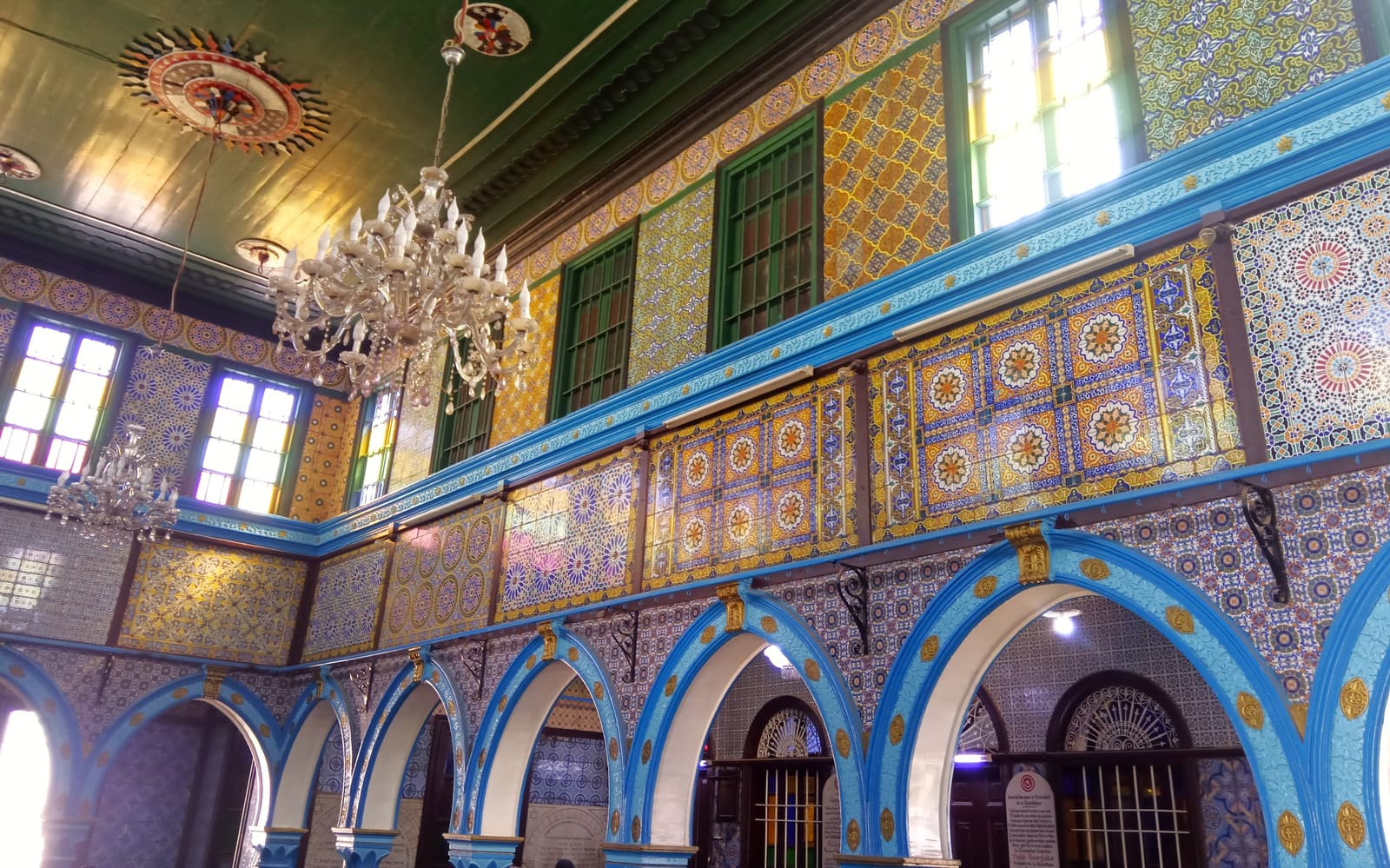
Inside, the main prayer hall is a surprise after the plain exterior: blue-painted arches and columns, coloured tiles, carved wood, stained glass and rows of hanging lamps. An inner sanctuary is said to keep one of the oldest Torah scrolls in the world. Across the courtyard, a hostel (the fondouk) once lodged pilgrims.
Each spring, around the Jewish holiday of Lag BaOmer, El Ghriba hosts a pilgrimage that draws Jewish visitors from Tunisia, France, Israel and beyond. The synagogue has twice been the target of deadly attacks — a truck bombing in 2002 and a shooting during the 2023 pilgrimage — and security is now very tight. Visit with respect, follow the guards’ instructions and check the current situation before you go.
Top things to do: El Ghriba Synagogue
Visit the prayer hall
Visitors are generally admitted outside services, in return for a small entrance fee or donation. Expect a passport or ID check and a bag search at the entrance. Head coverings are offered at the door; shoulders and knees should be covered, and in the inner hall you may be asked to remove your shoes.
Look at the details
Take time with the tilework, the painted ceilings and the plaques left by pilgrims. Photography rules vary — ask before taking pictures, and never photograph people praying.
Walk on to Djerbahood
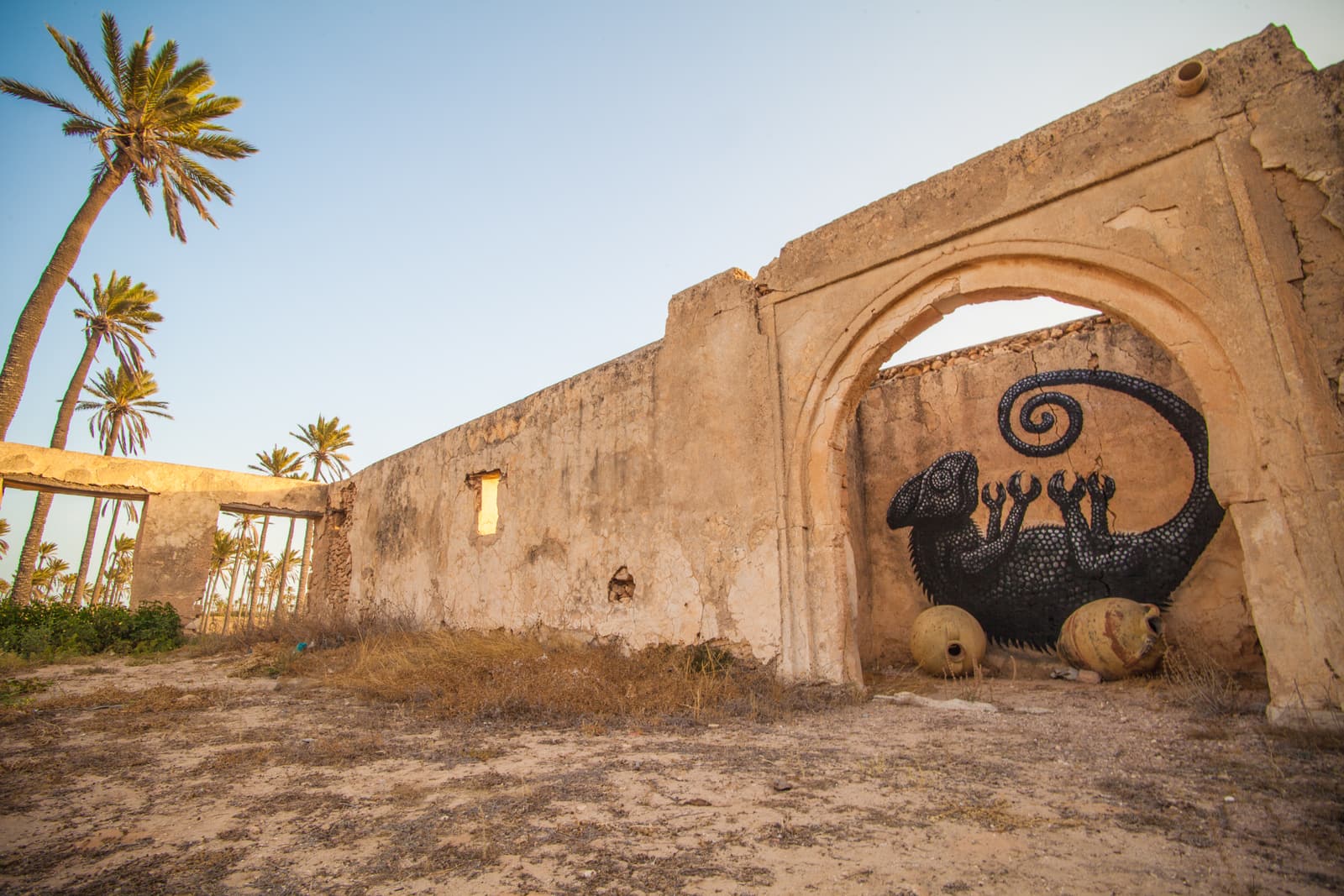
The murals of Djerbahood begin a few hundred metres away in Erriadh, so the two make a natural pair.
Understand the community
The island’s Jewish population today is small — numbering in the low thousands at most — and lives mainly in Hara Kebira, near Houmt Souk, and in Erriadh. A good guide can explain how Jewish and Muslim islanders have shared the island’s trades, markets and festivals for centuries.
How to get to El Ghriba Synagogue
- By taxi: about 10–15 minutes from Houmt Souk, 30–40 minutes from most hotels in the Zone Touristique.
- With a tour: almost every half-day island tour includes El Ghriba, usually combined with Guellala and Djerbahood. This is the easiest way to visit if you do not want to arrange taxis.
- By car or scooter: the synagogue is signposted from the Houmt Souk–Guellala road; park outside the security perimeter.
Insider tips
- The synagogue is closed to tourists on Saturdays (the Sabbath) and on Jewish holidays, and access can be restricted at short notice during the pilgrimage or for security reasons.
- Bring your passport or ID card.
- Dress modestly: covered shoulders and knees for everyone.
- Check your government’s travel advice and local news before visiting around the pilgrimage period.
Best tours for El Ghriba Synagogue
These well-reviewed experiences are the easiest way to see El Ghriba Synagogue:
 Island tour from €19
Djerba Express: The Island’s Highlights in Half a Day
The most-reviewed Djerba tour on GetYourGuide by a wide margin: a guided half-day loop that packs the souks, El Ghriba and some of the island’s prettiest corners into one morning or afternoon.
- The souks of Houmt Souk
- A visit to the El Ghriba synagogue
- Beach and photo stops along the way
 Cultural tour from €19
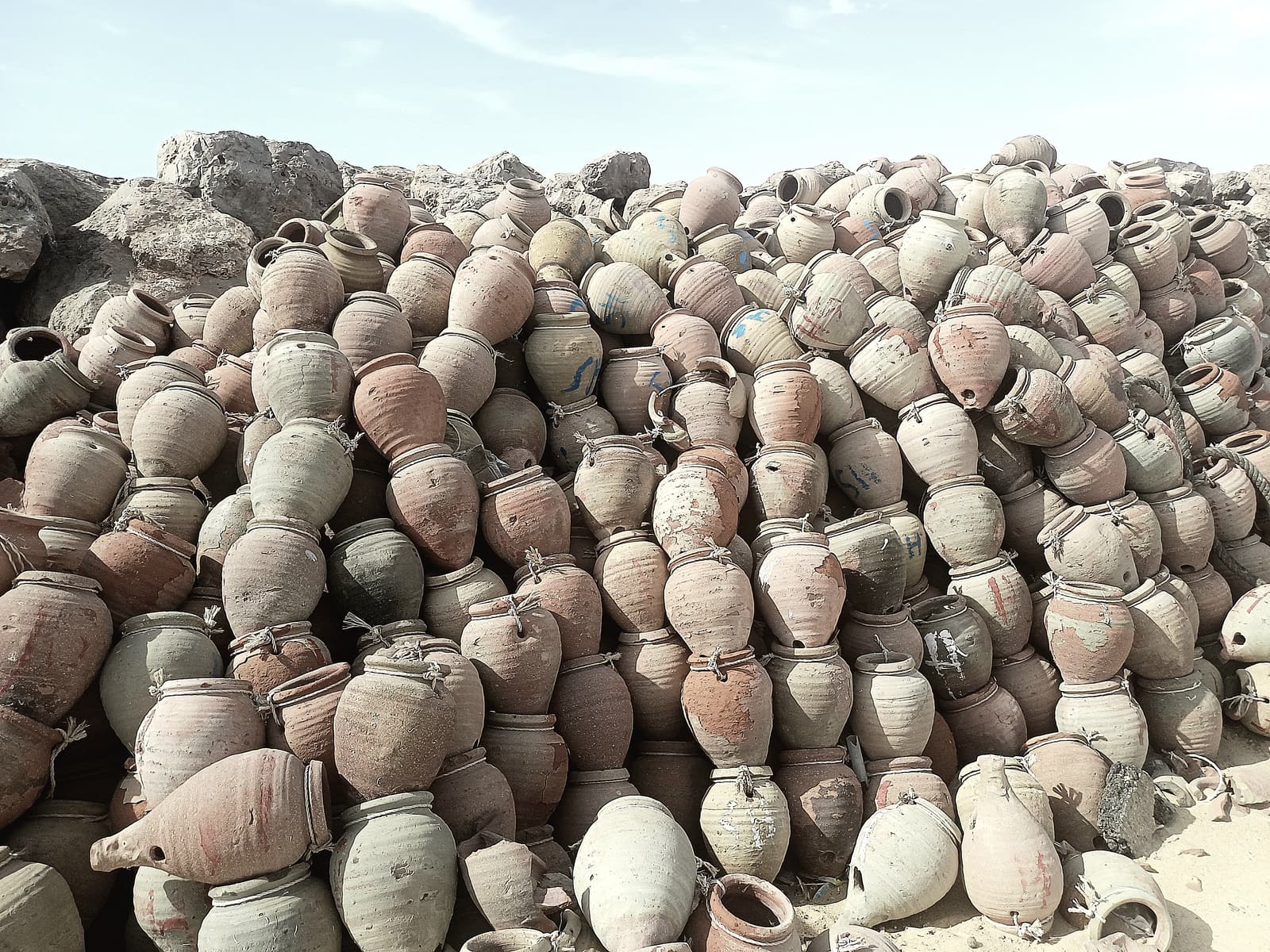
Pottery in Guellala, El Ghriba Synagogue & Djerbahood Street Art
A half-day cultural tour with a certified local guide linking three of the island’s best-known sights: the potters of Guellala, the El Ghriba synagogue and the street-art village of Djerbahood.
- A pottery workshop in Guellala
- The El Ghriba synagogue
- The murals of Djerbahood in Erriadh
 Island tour from €27
Island Highlights Tour with Hotel Pickup
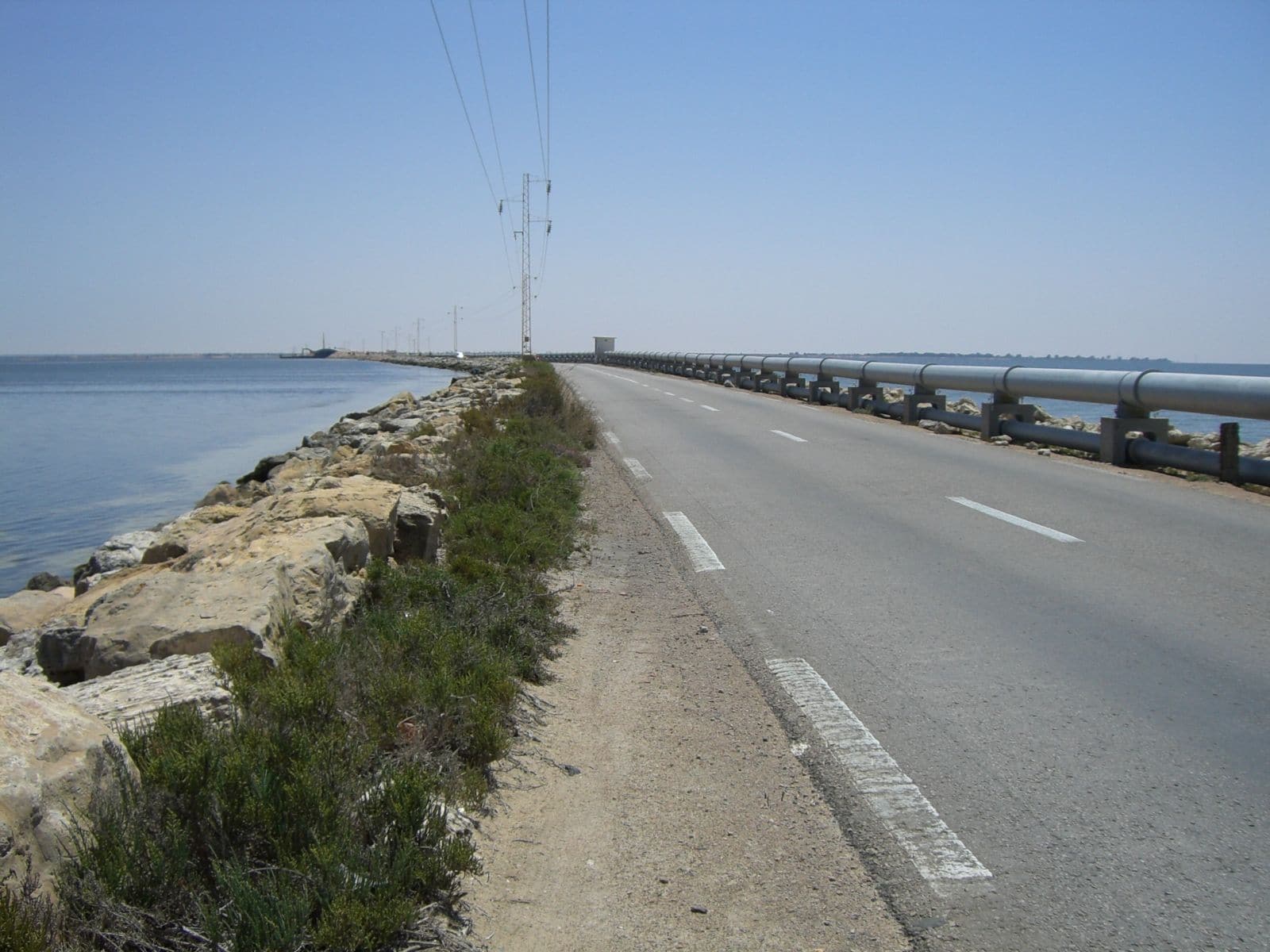
A guided loop of the island that adds the causeway to the mainland to the usual Guellala–El Ghriba–Djerbahood circuit, with hotel pickup.
- The Roman causeway at El Kantara
- A pottery demonstration in Guellala
- El Ghriba and a stroll through Djerbahood