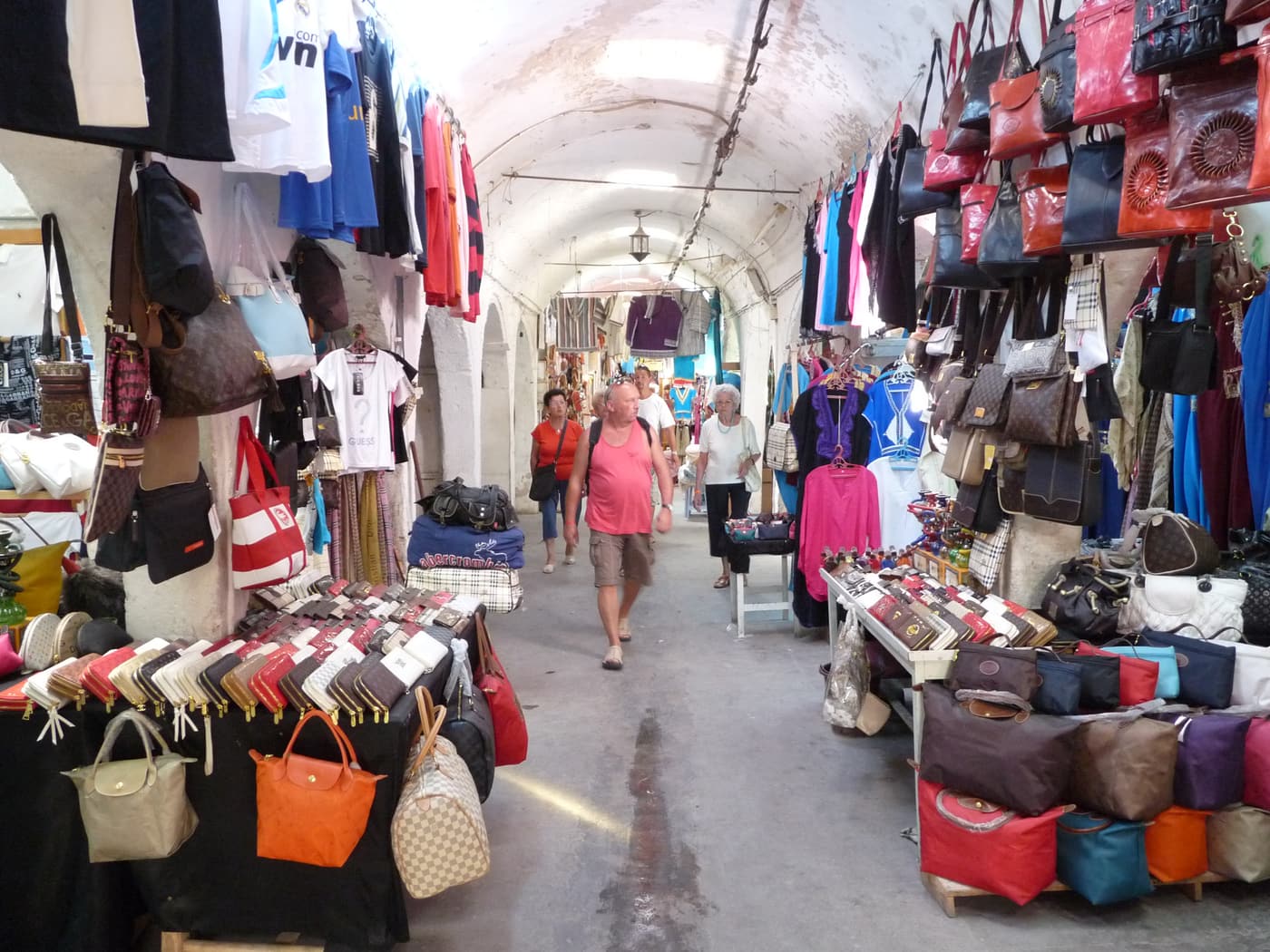
Houmt Souk — literally “the market quarter” — has been Djerba’s commercial heart for centuries, and it is still where islanders come to shop, bank and do business. The old centre is small and walkable: a web of vaulted market lanes, little squares shaded by trees and cafés, whitewashed mosques and the low courtyard buildings called fondouks, which once lodged merchants and their animals and now often serve as simple hotels.
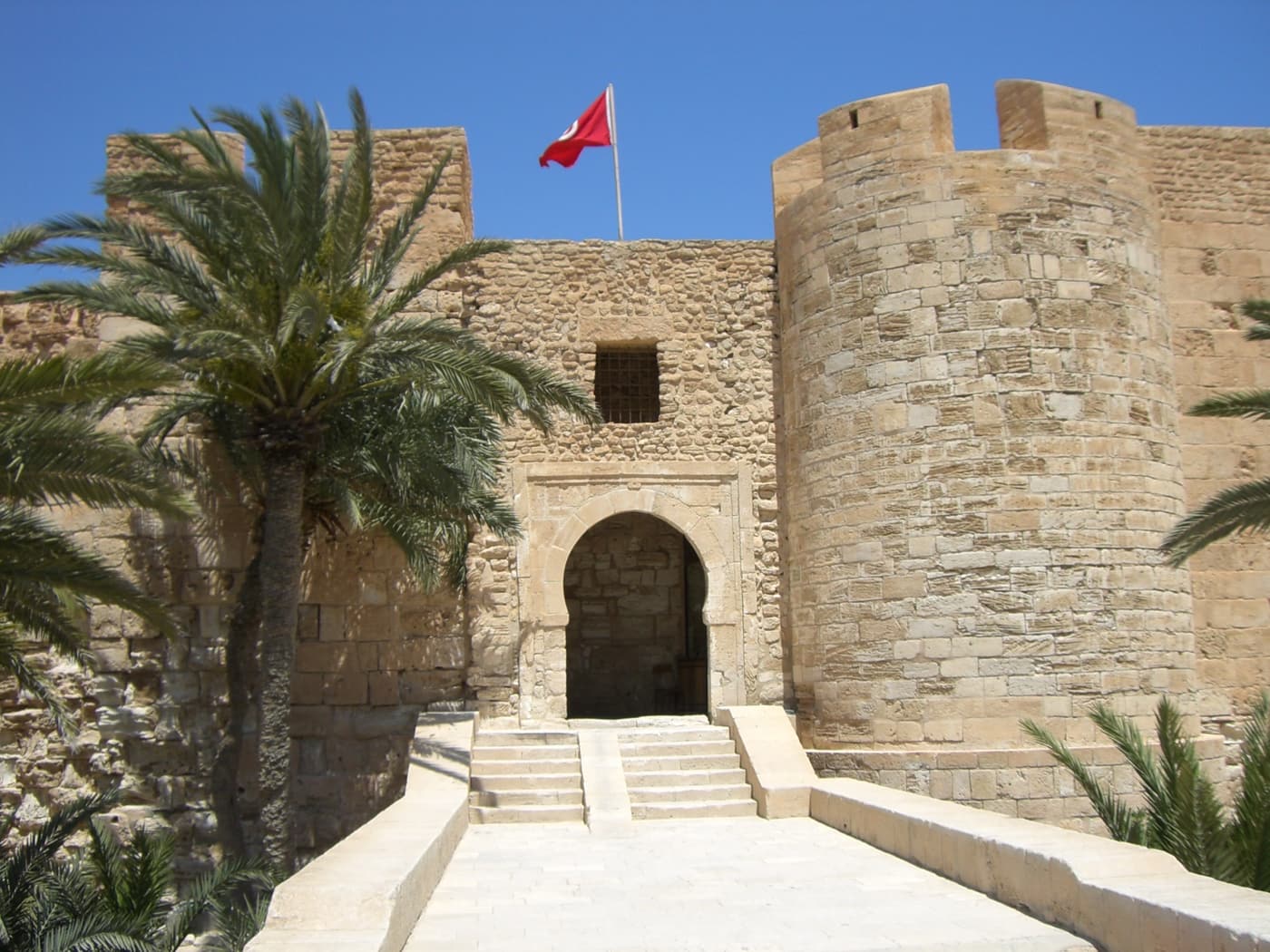
On the northern edge of town, by the sea, stands Borj El Kebir, also called Borj Ghazi Mustapha: a square fortress rebuilt and enlarged over several centuries on the site of earlier defences. In 1560 it was the scene of a famous siege, when an Ottoman fleet defeated a Spanish-led expedition; for nearly three centuries a tower built from the bones of the fallen stood nearby, until it was dismantled in the 19th century. A small monument marks the place.
Most visitors come for a morning in the souks, the fort and the harbour, combined with El Ghriba and Djerbahood, a few kilometres south. If you want to stay in a fondouk or a guesthouse rather than a beach hotel, see where to stay.
Top things to do: Houmt Souk
Wander the souks
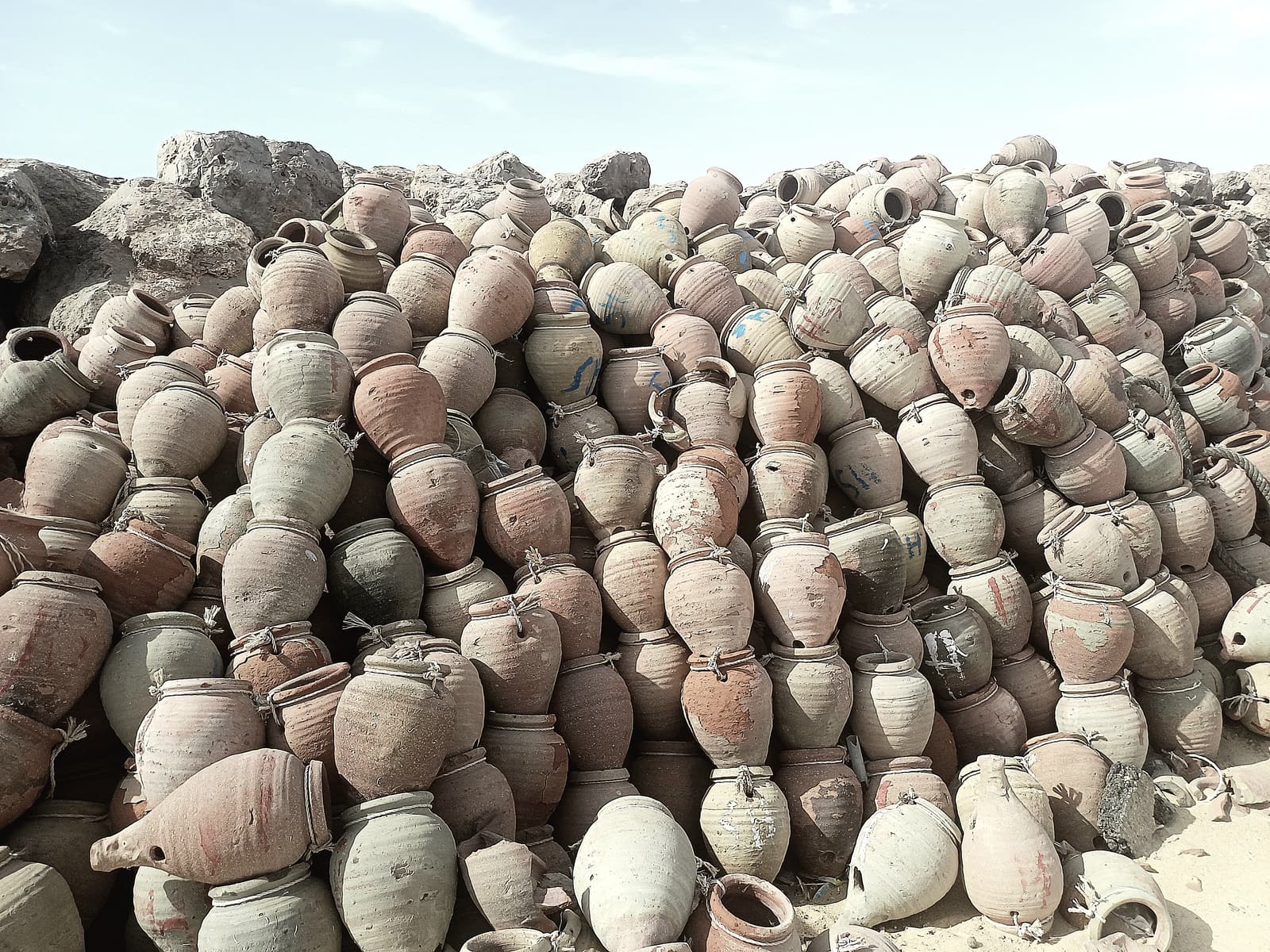
The covered lanes are grouped loosely by trade: jewellery (Djerba’s silver and gold work is traditionally associated with its Jewish craftsmen), woven blankets and rugs, leather, spices, pottery from Guellala and the usual souvenirs. Prices are rarely marked in the tourist lanes; bargaining is expected but should stay friendly. Fixed-price state craft shops give a useful price benchmark.
Visit Borj El Kebir
The fort’s walls, gate and ramparts can be explored in under an hour, with views over the harbour and the sea. Opening hours and the modest entrance fee change from time to time — check locally — and bring water in summer, as there is little shade on the walls.
See the Heritage Museum
The Musée du Patrimoine Traditionnel, on the edge of the centre, displays costumes, jewellery, pottery and reconstructed interiors that explain how life on the island was organised — a good primer before driving around the menzels (family homesteads) and mosques of the interior.
Watch the harbour and the fish auction
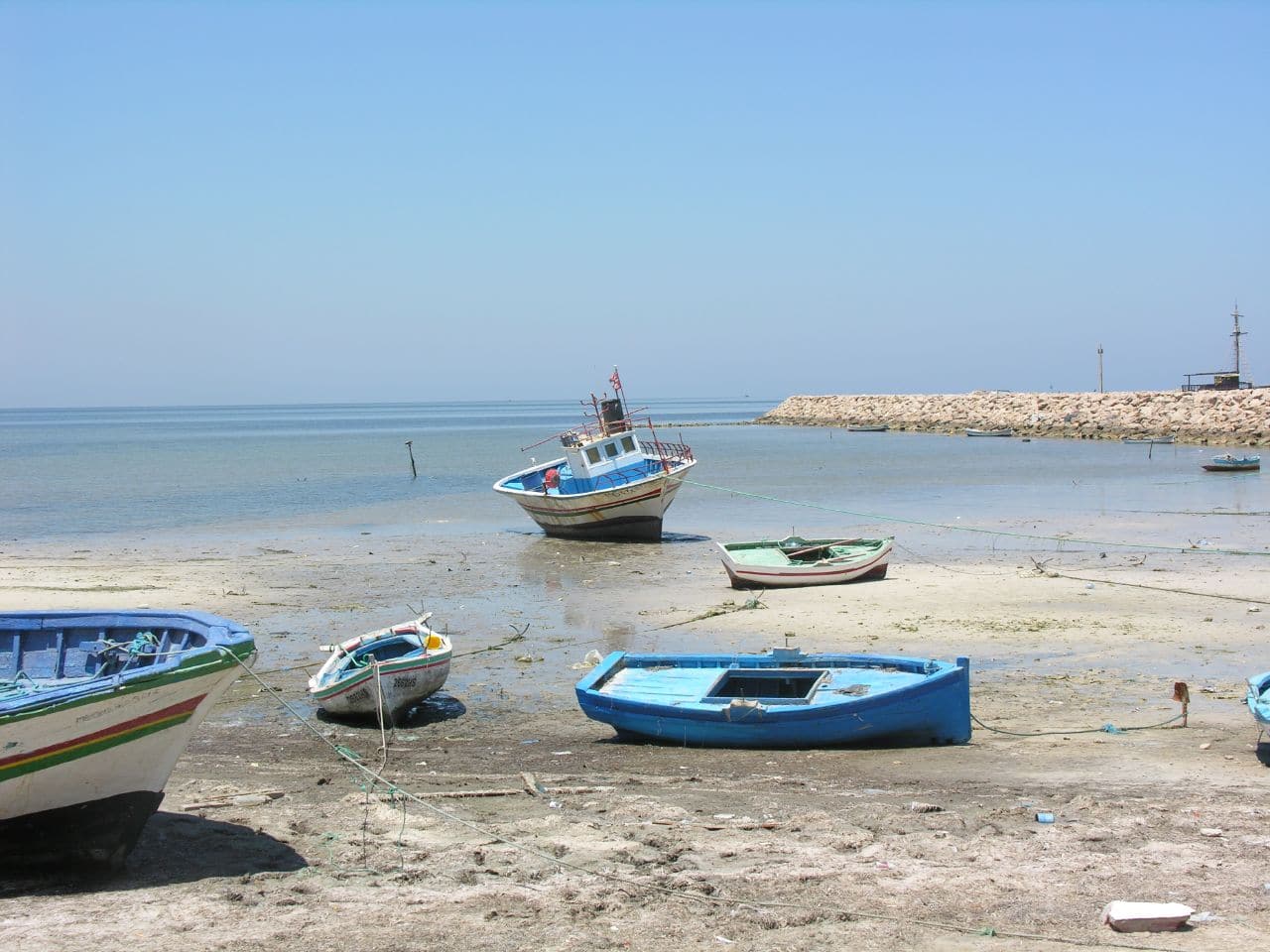
The fishing port lies just west of the fort. Mornings are busiest, when the catch comes in and, on some days, an auctioneer sells it piece by piece. Boats for Flamingo Island also leave from here.
Have lunch the island way
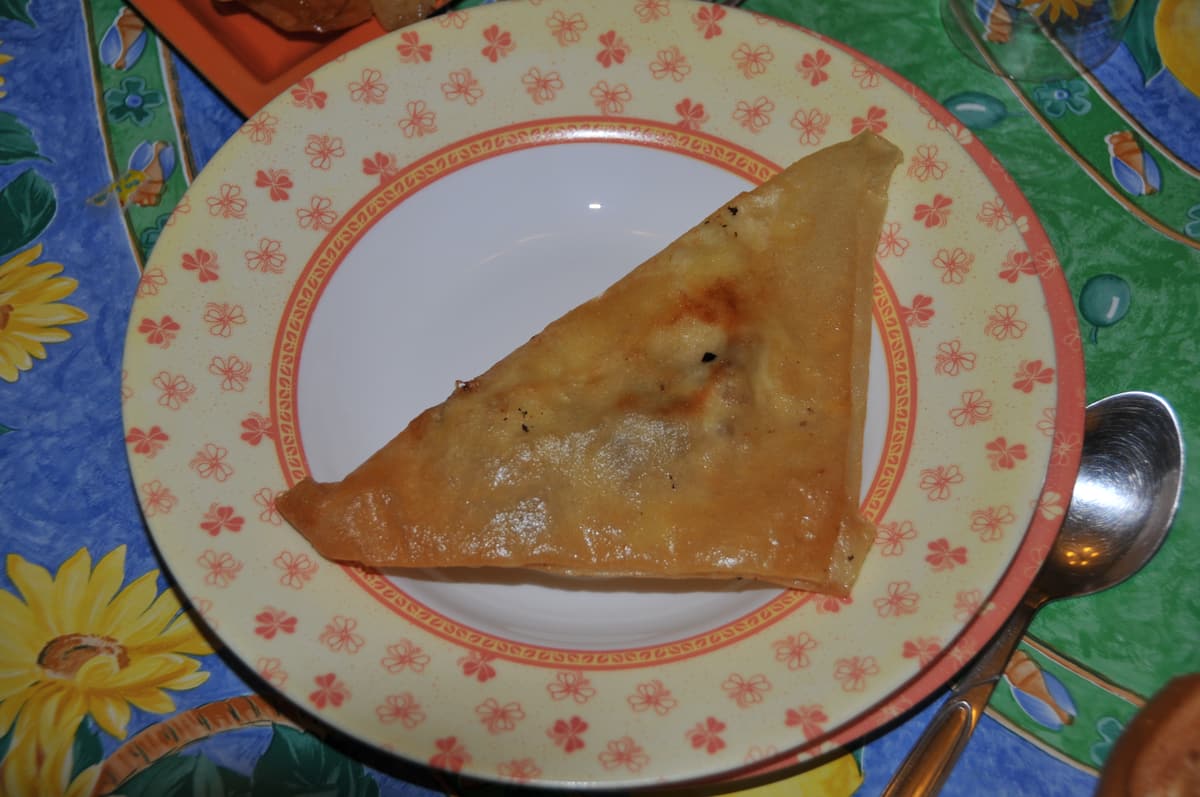
Look for grilled fish, couscous with fish, brik (a crisp pastry with egg) and, on cooler days, a bowl of lablabi (chickpea soup). Cafés around the central squares serve mint tea and coffee from early morning; it is the best place in Djerba to people-watch.
How to get to Houmt Souk
- From the Zone Touristique: around 15–25 km depending on your hotel; 20–40 minutes by taxi. Yellow taxis use meters on the island — ask the driver to switch it on.
- By bus: local buses link Houmt Souk with Midoun, the hotel coast and the villages, but they are infrequent and timetables are informal; the main bus station is on the edge of the centre.
- From the airport: Djerba–Zarzis airport is roughly 8–10 km west of town, about 15 minutes by taxi.
- On foot: once there, the souks, fort and harbour are all within a 15-minute walk of each other.
Insider tips
- Come in the morning: shops open early, the light is softer and the lanes are cooler. Many shops close for a long break in the afternoon and some close on Fridays around midday prayer.
- The weekly markets (traditionally held on Mondays and Thursdays in Houmt Souk) are livelier and more local — check the current day with your hotel.
- Carry small dinar notes; cards are accepted in larger shops and restaurants but not in most stalls.
- Dress respectfully if you plan to enter any religious building, and ask before photographing people.
Best tours for Houmt Souk
These well-reviewed experiences are the easiest way to see Houmt Souk:
 Food tour from €20
Djerba Gourmet Experience: Souks & Street Food
A guided street-food walk through Houmt Souk, tasting Tunisian classics and stopping at addresses known mostly to locals.
- Tastings of traditional Tunisian dishes
- The souk with a local guide
- Places tourists rarely find alone
Cultural tour from €25 Guided Cultural Tour with Sunset and a Fricassé Snack
An afternoon tour that ends where the light is best: the fort and souks of Houmt Souk, the murals of Djerbahood and sunset by the little coastal mosque of Sidi Yati, with a fricassé — a fried Tunisian sandwich.
- Borj Ghazi Mustapha fort
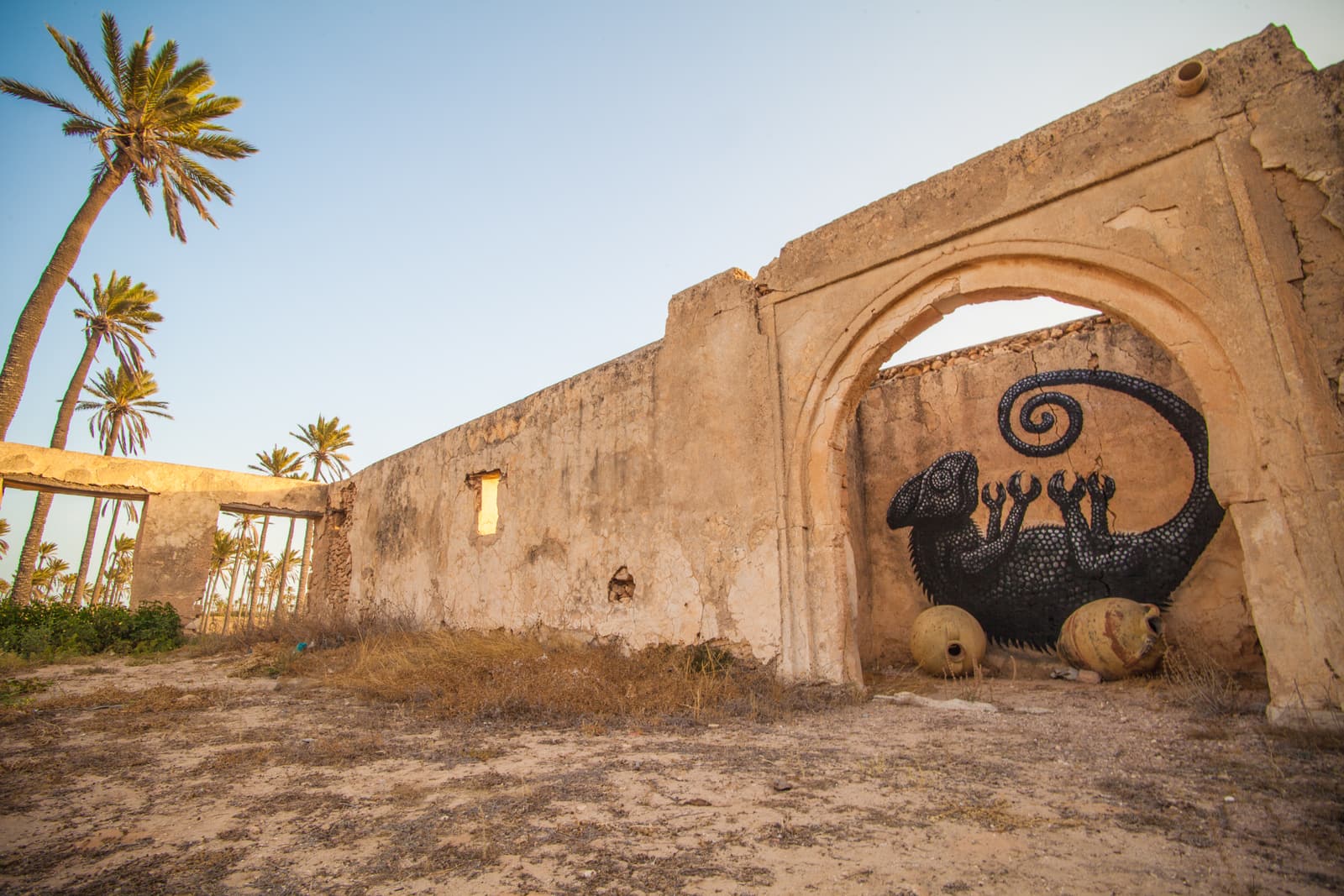
- Houmt Souk and Djerbahood
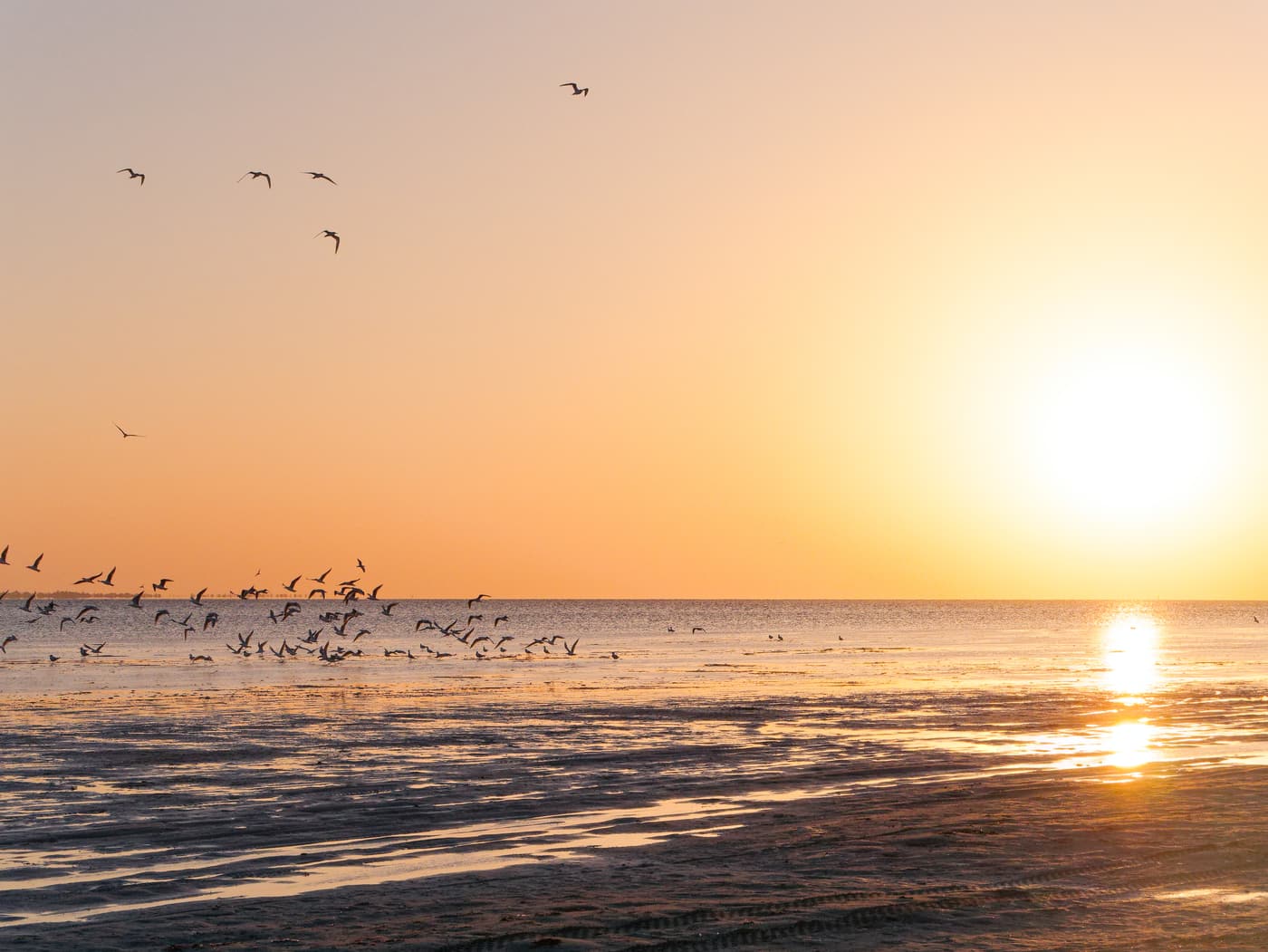
- Sunset at the Sidi Yati mosque with a fricassé
 Scooter tour from €16
Guided Scooter Tour: Djerbahood & Houmt Souk
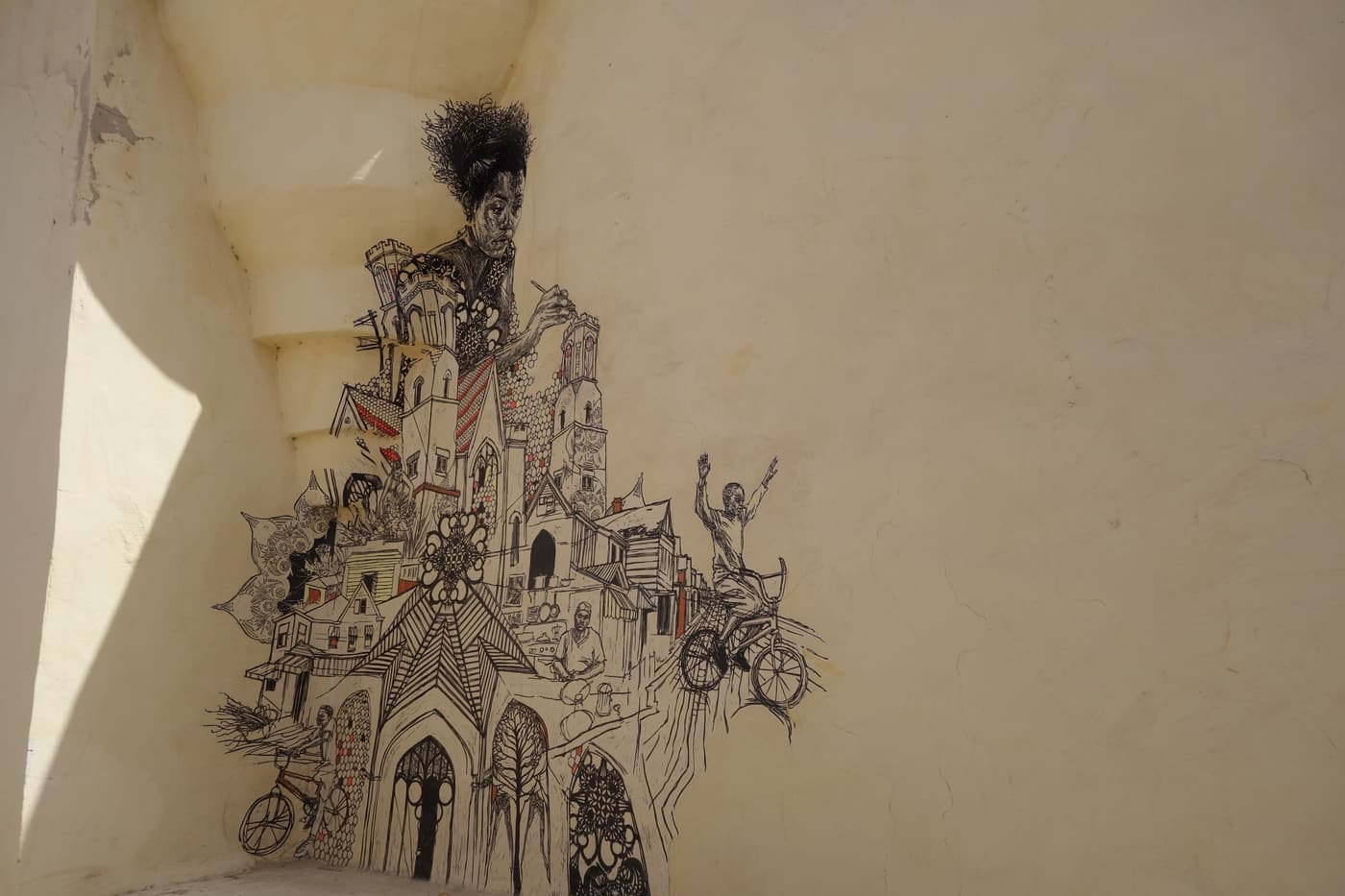
A morning on two wheels: a guided scooter convoy to the fort and souk of Houmt Souk and the murals of Erriadh, with hotel transfers.
- Ride your own scooter with a guide
- The fort and souk of Houmt Souk
- Djerbahood murals and a place of worship
 Walking tour from €36
Houmt Souk Walking Tour
A guided walk through the island capital’s market lanes and history. It is a newer listing with no reviews yet, so read the details carefully before booking.
- The souks with a guide
- The town’s mix of cultures and history
- A slower pace than a bus tour